
How is the manufacturing process optimized for efficiency in mini salt grinder production?
Crafting Precision - Optimizing Efficiency in Mini Salt Grinder Production
The production of mini salt grinders requires a meticulous manufacturing process to ensure efficiency, precision, and the delivery of a high-quality product. From sourcing materials to final assembly, each step plays a crucial role in achieving optimal efficiency. Here Mangol as a coffee grinder manufacturer will share how manufacturers streamline the production of mini salt grinders to meet the demands of both quality and productivity.
1. Material Sourcing and Quality Control: Foundation for Excellence
Efficiency begins with the selection of high-quality materials. Manufacturers source materials, such as stainless steel for grinder components and durable plastics for the housing, from reliable suppliers. Rigorous quality control measures are implemented to ensure that the raw materials meet stringent standards, laying the foundation for a robust and long-lasting product.
Material sourcing and quality control constitute the foundational pillars upon which the entire manufacturing process rests. This initial stage in the production of any product, including mini salt grinders, is critical for ensuring the overall excellence, reliability, and longevity of the final product. Here's a closer look at how material sourcing and quality control serve as the foundation for excellence in mini salt grinder production:
Material Sourcing: Selecting the Building Blocks
Supplier Collaboration: Manufacturers establish partnerships with reputable suppliers to source high-quality materials. This collaboration ensures a reliable and consistent supply chain, minimizing the risk of production delays or interruptions.
Material Diversity: Depending on the design and specifications of the mini salt grinder, a variety of materials may be sourced. Stainless steel is commonly chosen for grinder components due to its corrosion resistance, while durable plastics are selected for housing.
Compliance with Standards: Materials must meet industry standards and regulations to guarantee safety, performance, and environmental responsibility. Manufacturers often prioritize suppliers with a proven track record of adhering to these standards.
Quality Control: Rigorous Inspection Protocols
Incoming Inspection: Upon receipt of materials, a comprehensive incoming inspection is conducted. This involves assessing the physical and chemical properties of the materials to verify their conformity with predefined specifications.
Testing Protocols: Various testing protocols are implemented to evaluate the mechanical, chemical, and structural properties of the materials. This may include tensile strength tests, chemical composition analysis, and assessments of material hardness.
Dimensional Accuracy: Precision is paramount, especially in components that require machining. Quality control measures include checking the dimensions of each part against design specifications to ensure uniformity and accuracy.
Traceability: Establishing traceability is crucial for quality control. This involves documenting and tracking the origin, processing, and handling of each material throughout the production cycle. It aids in identifying and rectifying any issues that may arise.
Continuous Improvement: Iterative Refinement
Feedback Loops: Manufacturers establish feedback loops with suppliers to communicate any issues or improvements needed in the sourced materials. This continuous dialogue helps refine the selection criteria and ensures a proactive approach to quality.
Data-Driven Decision-Making: Quality control processes are often supported by data analytics. Analyzing data from inspections and testing allows manufacturers to identify patterns, trends, or areas for improvement, fostering an environment of continuous enhancement.
Building a Solid Foundation. In the realm of mini salt grinder production, the maxim "quality in, quality out" holds true. Material sourcing and quality control lay the groundwork for excellence, influencing every subsequent step in the manufacturing process. By prioritizing reputable suppliers, adhering to stringent quality standards, and embracing continuous improvement, manufacturers can build a solid foundation for the production of mini salt grinders that meet or exceed customer expectations.
2. Automated Machining Processes: Precision at Every Turn
To achieve consistent precision in the manufacturing of mini salt grinders, automated machining processes are employed. Computer Numerical Control (CNC) machines play a pivotal role in shaping components with accuracy, minimizing variations and defects. This automation not only enhances precision but also accelerates the production timeline, contributing to overall efficiency.
3. Injection Molding for Housing Components: Speed and Uniformity
The housing of mini salt grinders is often produced using injection molding. This process allows for the rapid production of uniform plastic components. The molds are designed to create intricate shapes and details, ensuring that each housing component meets the specified dimensions. Injection molding contributes to both efficiency and cost-effectiveness in large-scale production.
4. Surface Treatment and Finishing: Enhancing Aesthetics and Durability
Efficiency in the manufacturing process extends to the surface treatment and finishing of mini salt grinders. Techniques such as polishing, coating, or electroplating are employed to enhance both aesthetics and durability. These processes are carefully calibrated to maintain efficiency without compromising the quality of the final product.
5. Assembly Line Optimization: Seamless Integration of Components
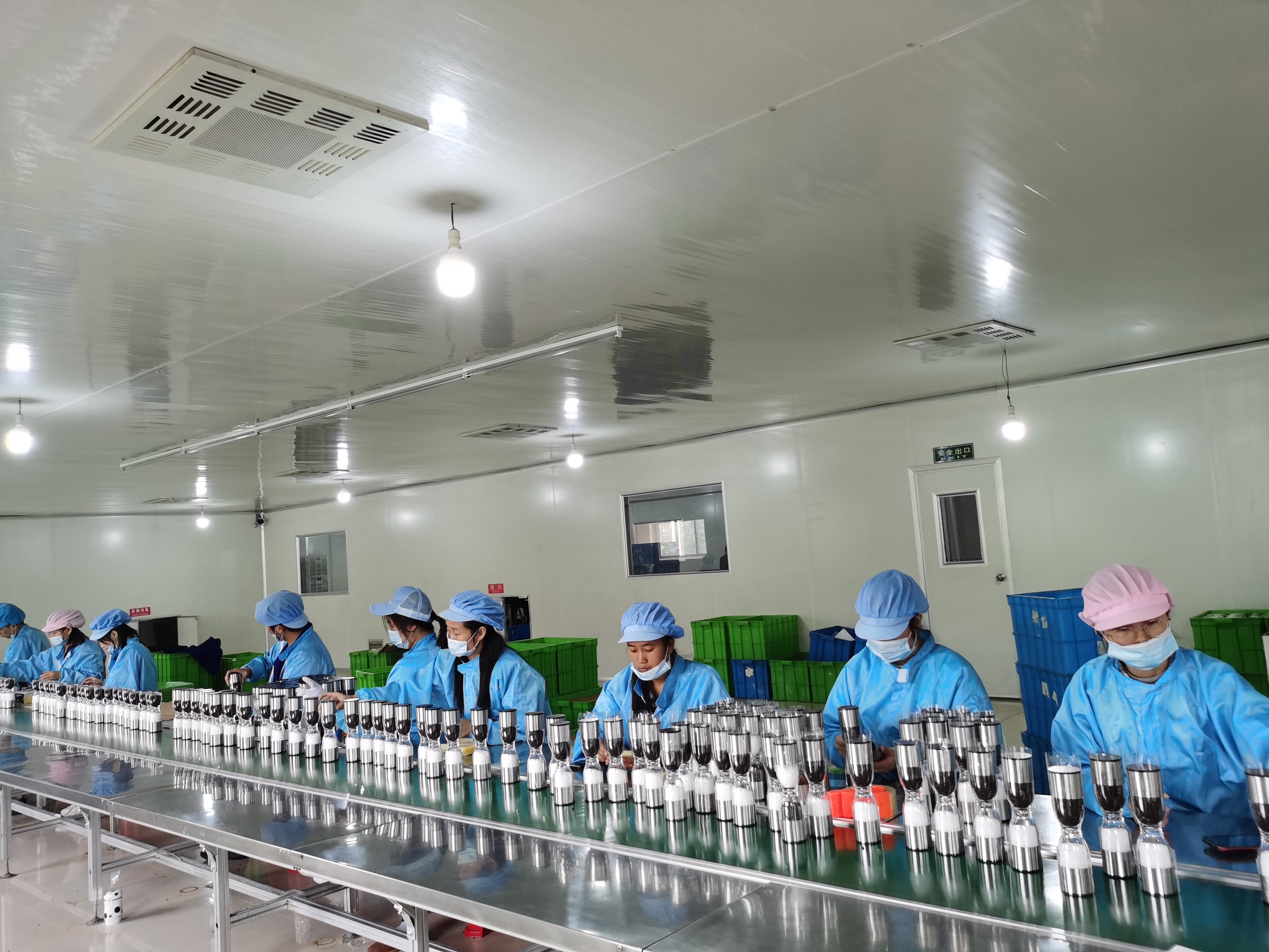
The assembly line is a critical juncture where various components come together to form the final product. Efficient assembly line processes are established to streamline the integration of grinder mechanisms, housing, and any additional features. Automation is often incorporated to handle repetitive tasks, reducing assembly time and minimizing errors.
6. Quality Assurance Testing: Ensuring Reliability
Efficiency in production is meaningless without stringent quality assurance. Mini salt grinders undergo comprehensive testing, including functionality checks, durability assessments, and salt corrosion resistance tests. Automated testing equipment is often employed to expedite the inspection process while maintaining a high level of accuracy.
7. Packaging Automation: Ready for Distribution
The final stage of the manufacturing process involves packaging the mini salt grinders for distribution. Automation is once again utilized to handle packaging tasks efficiently. This includes filling salt chambers, sealing packages, and labeling products. Automated packaging systems not only speed up the process but also reduce the likelihood of errors in packaging.
In the world of mini salt grinder production, efficiency is a delicate balance between precision and speed. From material selection to packaging, each step in the manufacturing process is optimized to ensure that the end product not only meets high-quality standards but is also produced in a timely and cost-effective manner. As manufacturers continue to refine their processes and embrace technological advancements, the result is a mini salt grinder that seamlessly combines functionality, durability, and aesthetic appeal.
 Which is Better, a Ceramic or Steel Pepper Grinder?
  Tips for Choosing Easy Clean Coffee Grinder Features Are Safe and Food-Grade?
  Are Automatic salt and pepper machine Worth the Investment?
  Exploring Materials in usb gravity electric salt and pepper mills - Mangol Grinder
  Role of Functional Testing in Mini Electric Burr Grinder Manufacturing
  Quality Control Measures in Mini Electric Burr Grinder Manufacturing
  Mini Electric Burr Grinder Manufacturing Process
  Hand Manual Grinders Design Process and Quality Control
  Voluntary German Safety Certification for Coffee Grinders - GS Mark
  Electrical Safety under the Low Voltage Directive (LVD): Ensuring Compliance for Coffee Grinders
  Top 5 Pepper Mills and Grinders to Spice up Your Meals
  Managing Noise Levels in Electric Grinder Salt Pepper for a Quiet Culinary Experience
  Electric Salt and Pepper Shakers with Lights Design Rationale
  What types of peppercorns are suitable for use in an auto pepper grinder?
  How is the maintenance and cleaning process different for a compact coffee burr grinder small compared to larger models?
  What materials are commonly used in the construction of stepless hand grinders?
  Selecting a High Quality Electric Ceramic Burr Coffee Grinder
  The Most Reputable Handheld Coffee Grinders Brand
  The Key Components of an Electric Ceramic Burr Coffee Grinder
  History of Electric Coffee Bean Grinders